
Drought stress trees Billings properties are dealing with right now is one of the most common issues we see in mid-to-late summer. Hot temperatures, dry soil, and low humidity put heavy pressure on trees across Billings, Billings Heights, Lockwood, Laurel, Shepherd, and Yellowstone County.
Many trees look fine at first, then suddenly start dropping leaves, thinning out, or developing dead branches. Catching drought stress trees Billings early gives you a better chance of saving them — or safely removing them before they become a hazard.
Why Drought Stress Trees Billings Are So Common in Summer
Billings summers are tough on trees. High heat increases water loss through the leaves, while wind and low humidity dry the soil quickly. Most lawn sprinklers only wet the top few inches of ground, which does very little for established tree roots.
As a result, drought stress trees Billings yards show up every year during extended dry periods. Trees already dealing with insects, previous damage, or poor soil conditions decline even faster.
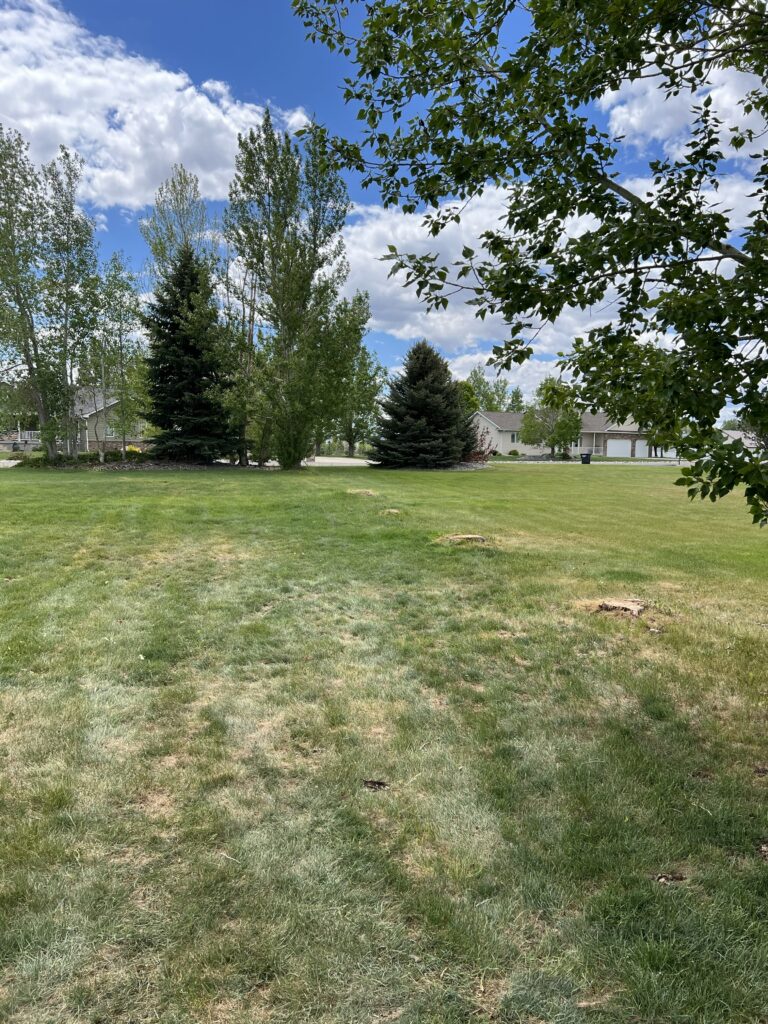
Signs of Drought Stress Trees Billings Homeowners Should Watch For
Look for these warning signs:
- Leaves that appear dull, curled, or wilted
- Early leaf drop or premature fall color
- Thinning canopy, especially in the upper branches
- Dead twigs or branch tips
- Cracked, dry soil around the base of the tree
- Increased insect activity on the tree
If you notice several of these symptoms together, you are likely looking at drought stress trees Billings residents commonly report in August.
What You Can Do About Drought Stress Trees Billings
Deep watering is the most effective first step. Water slowly at the drip line (the area under the outer edge of the canopy) rather than against the trunk. Aim for a thorough soaking once or twice a week instead of light daily watering.
Adding a 2–4 inch layer of mulch (kept a few inches away from the trunk) also helps hold moisture. For more detailed guidance on tree care in Montana, the Montana State University Extension and the International Society of Arboriculture are solid resources.
When drought stress trees Billings homeowners notice becomes severe — large dead limbs, major canopy loss, or a noticeable lean — professional evaluation is the safer option.
How All Tree Works Helps with Drought Stress Trees Billings
We offer free on-site estimates for trees showing signs of drought stress. If the tree can recover with proper care or selective pruning, we’ll tell you straight. If removal is the better long-term solution for safety, we handle the job cleanly and leave the yard spotless.
Call 406-671-7644 today for a free estimate. We’ll come look at the tree and give you clear options.
Frequently Asked Questions
How often should I water established trees in Billings during a dry summer?
Deep watering once or twice a week is usually better than light daily watering. Focus on the area under the canopy (the drip line).
Can a drought-stressed tree recover?
Many can if the stress is caught early and watering improves. Advanced canopy dieback or root damage often means removal is the safer long-term option.
Does wildfire smoke affect trees?
Smoke itself is less damaging than the dry, hot conditions that usually accompany it, but prolonged poor air quality and heat can add extra stress.
When is the best time to have a hazardous tree removed?
As soon as it is identified. Waiting until fall or winter can leave the risk in place through wind and storm season.
Do you offer free estimates?
Yes. Call 406-671-7644 and we’ll schedule a no-obligation visit.
Ready to check on a tree that’s looking stressed? Call 406-671-7644 today for your free estimate. We’ll give you clear answers and a clean, professional solution if work is needed.
Taylor All Tree Works Your local tree company focused on quality & cleanup Serving Billings, Billings Heights, Lockwood, Laurel, Shepherd & all of Yellowstone County